
![[VIDEO] Participants of the Diabfrail program tell their experience](https://diabfrail-latam.eu/wp-content/uploads/2024/12/diab-lat-frail-1080x675.jpg)
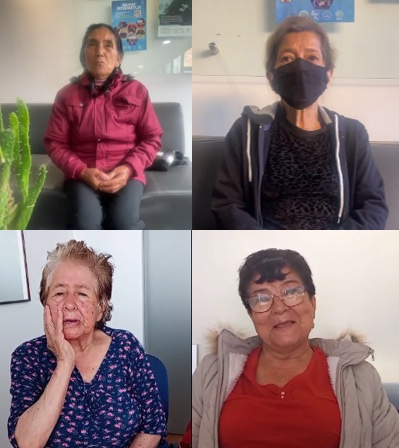
[VIDEO] Participants of the Diabfrail program tell their experience
Participants of the Diabfrail program tell their experience and the effects that the change in habits and the practice of exercises generated on their health, within the framework of the implementation carried out by PAHO and the Jujuy Ministry of Health for the prevention and care of diabetes.
Participantes del programa Diabfrail cuentan su experiencia y los efectos que generaron el cambio de hábitos y la práctica de ejercicios en su salud, en el marco de la implementación que llevan adelante OPS y el Ministerio de Salud de Jujuy para la prevención y cuidado de la diabetes.
Publicada por OPS/OMS Argentina – PAHO/WHO Argentina en Miércoles, 27 de noviembre de 2024

INTERNATIONAL DIABETES DAY NOVEMBER 14
Doctors from the DIABFRAIL-LATAM project warn of the rise in diabetes due to population aging
- The Head of the Geriatrics Department at Getafe University Hospital, Dr. Leocadio Rodríguez Mañas, highlights that two-thirds of people with diabetes worldwide are over 65 years old.
- Rodríguez Mañas emphasizes the importance of maintaining an active lifestyle and healthy nutrition to prevent the disease, which «does not kill after the age of 75 but does incapacitate.»
- The specialist leads DIABFRAIL-LATAM, a project involving organizations such as the Panamerican Health Organization (PAHO), the Spanish Biomedical Research Networking Center (CIBERFES), Getafe University Hospital (Madrid), renowned universities in Spain and Latin America, and the Spanish Confederation of Older People Organizations (CEOMA). The initiative includes an educational plan, exercise routines, and adjustments to therapeutic goals for frail and pre-frail older adults with diabetes in Latin American countries.
Madrid, November 14, 2024. The Head of the Geriatrics Department at Getafe University Hospital (Madrid) and Scientific Director of the Frailty and Aging area at the Spanish Biomedical Research Networking Center (CIBERFES), Dr. Leocadio Rodríguez Mañas, has highlighted the increase in diabetes cases due to «unhealthy lifestyles» but especially because of population aging.
On the occasion of International Diabetes Day, celebrated on November 14, Rodríguez Mañas noted that «obesity and sedentary lifestyles, caused by poor habits, are major risk factors for diabetes,» as are the changes that occur as people age, such as «fat concentrating in the abdomen and muscle fibers and the body becoming insulin-resistant.»
The specialist stated that two-thirds of people with diabetes worldwide are over 65 years old and stressed that «for those over 75, the disease does not increase the risk of death but does increase the risk of disability and dependency.» Therefore, he emphasized the need for early intervention to address «patient frailty, lifestyle, and nutrition, along with pharmacological treatments that are not only effective but also protective for the patient.» «The goal for older adults with diabetes is to help them remain autonomous,» he added.
To achieve this, the Spanish Biomedical Research Networking Center (CIBER), supported by EU Horizon 2020 research and innovation funding, and in collaboration with the Pan American Health Organization (PAHO), prestigious foundations, universities, institutes, hospitals from Spain, Italy, and Latin America, and the Spanish Organization of Older People Organizations, has been studying the implementation of beneficial lifestyle guidelines for frail older adults in four Latin American countries: Mexico, Chile, Peru, and Colombia.
The project examines the effects of a program combining education on diabetes and nutrition, treatment adjustments tailored to individual goals, and a physical exercise plan based on an application called VIVIFRAIL®, providing comprehensive care to older adults with diabetes while preserving their functionality. Addressing health issues associated with diabetes in older adults not only improves individuals’ quality of life but also reduces the economic and social costs of care.
Rodríguez Mañas explained that they decided to launch this program in Colombia, Chile, Peru, and Mexico following the success of a similar intervention in EU countries, the MIDFRAIL program, also funded by the EU. In Latin America, the program is conducted «at home» and is adapted to each country’s specific conditions. According to the geriatrician, «the results are very positive, and we see that after the success in Europe, it also works well in lower-income countries.» This program, which will conclude in December, includes over 700 participants and is already being expanded to nine other countries in Latin America and the Caribbean.
Impact on Quality of Life
Type 2 diabetes mellitus is one of the most prevalent diseases among older adults, associated with geriatric syndromes such as frailty. It significantly impacts quality of life, causing issues like vision loss, incontinence, depression, or falls. José Luis Fernández Santillana, President of CEOMA, one of the partners in the project, urged public administrations to «be more involved» with patients and «increase the distribution of electronic glucose monitoring sensors.» Such devices «would free users from finger pricks, enabling them to monitor their glucose levels via mobile devices,» thereby «reducing emergency visits and hospitalizations by allowing better dosage regulation at home.»
Through the program, participants gain more knowledge about the disease, its causes, consequences, and management. They learn self-care practices and how to handle situations like hypoglycemia or malnutrition while understanding the importance of incorporating physical activity into their daily lives. A nutrition plan based on appropriate, non-restrictive diets and a routine of aerobic, resistance, balance, and flexibility exercises form the foundation of the program.
The study also aims to demonstrate that non-pharmacological strategies should be integral to disease management. Additionally, it analyzes the impact of functional decline caused by symptomatic hypoglycemia episodes and hospitalizations.
The DIABFRAIL-LATAM team underscores the program’s relevance, given the lack of intervention studies in older adults with diabetes and the limited applicability of clinical guidelines for this population.


Meeting of the team responsible for the Diabfrail Latam project at the headquarters of the Pan American Health Organization (PAHO), Washington DC, within the framework of World Diabetes Day, November 14.

El Salvador Launches DiabFrail-Latam Program to Improve Quality of Life for Elderly People with Diabetes in Chalatenango
The Ministry of Health of El Salvador, in collaboration with the Pan American Health Organization (PAHO/WHO), has launched the DiabFrail-Latam program at the La Palma Health Unit in Chalatenango. This initiative aims to improve the quality of life for elderly people living with diabetes by addressing diabetes-related frailty and promoting the well-being and independence of older adults.
DiabFrail-Latam focuses on specific interventions to enhance the functionality of elderly people, targeting factors that contribute to the development of frailty and its complications. Additionally, the program seeks to strengthen the capacity of local communities to protect and promote their health.
The Ministry of Health, through the Offices of Non-Communicable Diseases and the Comprehensive Care Unit for the Elderly, has implemented the program in Chalatenango, forming a specialized team that received training on July 29. Following the training, the local Elderly Group was invited to participate in the DiabFrail intervention, which they enthusiastically accepted.
The official launch of the program took place on August 21, during which health passports and exercise guides were distributed to participants. An educational session was held, and dates and times for weekly follow-up sessions were established to ensure the program’s success.
PAHO/WHO highlights the importance of these multisectoral initiatives, which aim not only to improve the physical health of elderly people but also to change the perception of this group as passive recipients, showcasing their potential to actively contribute to their communities and enhance their quality of life.

VIVIFRAIL and DiabFrail Workshops in Intibucá and Santa Bárbara, Honduras
Honduras has launched a training program for facilitators of the «Diabfrail» and «Vivifrail» programs. These evidence-based interventions target older adults with and without diabetes, respectively, with the goal of improving their quality of life through small changes in physical activity and nutrition that can prevent the progression of diseases in the medium and long term.
The Ministry of Health of Honduras, through the Individual, Family, and Community Program and the Non-Communicable Diseases Program, together with the participation of the municipal governments of Intibucá and San Nicolás, the General Directorate for the Elderly (DIGAM/SEDESOL), and the National Institute for Diabetics (INADI), have decided to implement these programs in the aforementioned municipalities, with technical and financial support from PAHO/WHO. During the workshop in Intibucá, technical teams from the departments of Lempira and La Paz also joined.
From August to November, weekly sessions will be held with participants, coordinated by implementation teams made up of healthcare personnel and technicians from municipal governments. These teams will receive prior training to effectively apply the methodology in each session.
At the end of the pilot phase in the municipalities, the experiences of the participants, facilitators, technical teams, and support staff involved will be collected. This collection will enable the systematization of the experience, creating a tailored tool to facilitate the replication of the Diabfrail and Vivifrail programs in other interested communities and institutions.
The Decade of Healthy Ageing 2020-2030 Plan, which encompasses ten years of sustained collaboration, places older adults at the center of the strategy. This plan aims to bring together efforts from governments, civil society, international organizations, professionals, academic institutions, the media, and the private sector to improve the lives of older people, as well as their families and communities.
The Diabfrail program is designed for older adults with diabetes, focusing on improving their cognitive-behavioral approach to transform their quality of life. By incorporating small changes in physical activity and diet, it aims to prevent the progression of the disease in the medium and long term, promoting a sustainable approach that allows patients to enjoy healthy years without disabilities.
Meanwhile, the Vivifrail project is a physical exercise promotion program aimed at older adults without diabetes. It is an international benchmark for community and hospital interventions to prevent frailty and falls among older adults.

Launch of the DIABFRAIL-LATAM Program in La Magdalena Contreras, Mexico City
As part of the Urban Governance for Health and Wellbeing Project, a meeting was held with the work team from the La Magdalena Contreras municipal government, who will be responsible for implementing the DIABFRAIL-LATAM Program in their area.
This meeting took place at the offices of the Pan American Health Organization/World Health Organization (PAHO/WHO) Representation in Mexico. During the meeting, the municipality reaffirmed its commitment to the PAHO project, which aims to implement interventions designed to improve the functionality and quality of life of older adults with diabetes.
The meeting featured virtual participation from Patricia Morsch, PAHO Regional Advisor on Healthy Aging, and Samir Aruachan, a professor at the Institute of Healthy Aging at Javeriana University in Colombia, along with staff from PAHO/WHO in Mexico.
DIABFRAIL-LATAM Meeting Since joining the Movement of Healthy Municipalities, Cities, and Communities (MCCS) of the Region of the Americas in October 2024, the municipality has worked diligently to align its policies and practices with the regional standards set by PAHO/WHO. This effort has been crucial in improving community health and wellbeing, focusing on health promotion, social determinants of health, equity, and comprehensive wellbeing.
The world’s population is aging rapidly, with a significant increase in the number and proportion of older adults. By 2025, it is estimated that there will be over 1.2 billion older people globally.
The World Health Organization defines healthy aging as «the process of developing and maintaining the functional ability that enables wellbeing in older age.» This functional ability includes health-related attributes that allow a person to do what they value.
Older adults with diabetes are more susceptible to functional decline and disability. This vulnerability is due not only to the microvascular and macrovascular complications of diabetes but also to potentially modifiable factors such as poor glycemic control, sarcopenia (loss of muscle mass, strength, and function), frailty, low physical activity, oxidative stress, falls, and fractures.
In response to these challenges, the municipality has strengthened its efforts to promote healthy lifestyles, ranging from balanced nutrition to regular physical activity and stress management. Additionally, community programs and activities have been implemented to encourage healthy habits, fostering a more health-conscious and proactive community.
La Magdalena Contreras will incorporate the principles of the DIABFRAIL-LATAM Program into its community health policies, focusing on the early detection and prevention of diabetes, as well as the care of the elderly population. This includes educational and support programs for people with diabetes, and promoting physical activity and proper nutrition to prevent frailty among older adults.
In doing so, the municipality is emerging as a model of a healthy community in the region, aiming to improve the quality of life for its residents, reduce the incidence of chronic diseases, and enhance overall wellbeing, especially among the most vulnerable groups. Additionally, it remains committed to implementing sustainable health policies and working closely with PAHO/WHO to share experiences and best practices.

Diabfrail-Latam project advances in Latin America
Members of the DIABFRAIL-LATAM consortium met in the city of Bucaramanga, Colombia, on May 22 and 23 2024, to present the results of the research conducted in Chile, Colombia, Mexico, and Peru, and to align actions to favor the expansion of the project to other countries in Latin America based on the scale-up strategy. The meeting was attended by the consortium members from Chile, Colombia, Italy, Peru, and Spain, as well as the Pan American Health Organization (PAHO), which leads the dissemination and communication of the project, as well as its scale-up, with significant progress in some countries.
The meeting took place along the Congress of the Colombian Society of Geriatrics and Gerontology, held from 22 to 24 May, 2024, in the same city. During the congress, several members of the DIABFRAIL-LATAM Consortium offered lectures related to different aspects of the project and presented preliminary results of the proposed intervention to manage diabetes in older adults and prevent frailty. Patricia Morsch, regional advisor on healthy aging at PAHO, participated on the meeting and the congress, detailing PAHO’s strategy for the intervention’s scale- up , including opportunities for countries’ engagement.
About the Diabfrail-Latam project
The DIABFRAIL-LATAM project, funded by the European Union’s Horizon 2020 Programme, aims to scale-up scientifically validated interventions for older adults with diabetes in Latin America, with a focus on preventing and managing frailty. Coordinated by the Spanish Public Biomedical Network Research Center (CIBER), the project has the collaboration of European institutions, organizations, and universities, PAHO, and universities in Chile, Colombia, Mexico, and Peru.
Clinical research trials were carried out in Peru, Mexico, Chile and Colombia to test the intervention comprised of an exercise program and education in frail and prefrail older adults with diabetes. With the positive results and demonstrating feasibility, the intervention is ready to be scaled-up in Latin America, with the objective to integrate it into the routine clinical practice of older adults with diabetes. The scaling-up of the intervention is being led by PAHO, both from its regional HQ and from its country offices.
DIABFRAIL-LATAM builds on the achievements of the previous MIDFRAIL-STUDY project, funded by the European Union’s Seventh Framework Programme for Research and Innovation, and led by Professor Leocadio Rodríguez Mañas, who also coordinates DIABFRAIL-LATAM. MIDFRAIL-STUDY intervened in seven European countries and involved the participation of several research groups, some of them also collaborate in DIABFRAIL-LATAM.
In DIABFRAIL-LATAM, the intervention has been tailored to the specific needs of the participating Latin American countries and incorporates elements of the VIVIFRAIL project, funded by the Erasmus+ programme and coordinated by the Public University of Navarra, also a partner in this project.

Project closing ceremony in Chile
Thursday, May 30th – 9:00 a.m. Chile time – 3:00 p.m. Spain time
The Theater of the city of Requínoa, Chile, will host this important ceremony with the presence of local, regional and University authorities and also patients who, voluntarily, played a crucial role in the study and to whom we greatly appreciate their collaboration in the study.
Furthermore, in the ceremony, chaired by the mayor of Requinoa, Waldo Antonio Valdivia (who has provided practically all of the subjects participating in the intervention carried out in Chile), will participate several of the members of DIABFRAIL-LATAM’s Consortium to thank the municipality, and mainly its seniors, for their collaboration in the project.
Among others, the following experts will participate: Leocadio Rodríguez Mañas, project coordinator; Olga Laosa, deputy coordinator; Patricia Morsch, from the Pan American Health Organization – a subsidiary of the World Health Organization in America -, responsible for the dissemination and scaling packages, Walter Sepúlveda, responsible for research in Chile; Felipe Araya Quintanilla, researcher in the project at the San Sebastián University of Chile, Francisco Mansoa, head of project management, and Laura Pedraza, clinical pharmacologist of the coordinating team at the Getafe Hospital
We hope the ceremony will be well received and the results of the DIABFRAIL-LATAM program in Chile, be of interest to the entire scientific community and to patients with diabetes in general.

Next meeting in Colombia of the Diabfrail Latam work teams
The next meeting of the DIABFRAIL-LATAM Project will be held in the Colombian city of Bucaramanga on 22 and 23 May, coinciding with the Congress of the Colombian Society of Geriatrics and Gerontology, which will take place in that city from 22 to 24 May.
The DIABFRAIL-LATAM project, funded by the European Union’s Horizon 2020 Programme, seeks to scale up scientifically validated interventions for frail and prefrail older adults with diabetes in Latin America. The initiative, coordinated by the Spanish public Biomedical Network Research Centre (CIBER), involves the collaboration of several European institutions and universities, the Pan American Health Organisation and universities in Peru, Mexico, Colombia and Chile.
This project has carried out an intervention in frail and prefrail older adults with diabetes in Chile, Peru, Colombia and Mexico. Now It will scale up the intervention in order to integrate it in the usual clinical practice of these and other Latin American countries, through the active participation of the Pan American Health Organization, a project partner.
DIABFRAIL-LATAM builds on the achievements of the previous MIDFRAIL-STUDY project, funded by the European Union’s Seventh Framework Programme for Research and Innovation, and led by Professor Leocadio Rodríguez Mañas, who also coordinates DIABFRAIL-LATAM. MIDFRAIL-STUDY intervened in seven European countries and involved the participation of several research groups, some of them also collaborate in DIABFRAIL-LATAM.
In DIABFRAIL-LATAM, the intervention has been tailored to the specific needs of the participating Latin American countries. It also incorporates elements of the VIVIFRAIL project, funded by the Erasmus+ programme and coordinated by the Public University of Navarra, also a partner in this project.
The meeting at Bucaramanga will be attended by working teams from Spain, Italy, Colombia, Chile, Peru and Mexico, as well as the delegation from the Pan American Health Organization, which, in addition to leading the dissemination, is already making significant progress in scaling up, and the CEOMA team, which is in charge of disseminating the project among the older adults’ community.
In addition, during the congress of the Colombian Society of Geriatrics and Gerontology, several members of the DIABFRAIL-LATAM Consortium will also offer lectures where they will present several aspects of the project and advance some preliminary results of the intervention.

DIABFRAIL LATAM at the Annual Meeting of the Spanish Society of Geriatric Medicine (SEMEG)
During April 11 to 13, 2024, the 10th Meeting of the Spanish Society of Geriatric Medicine (SEMEG) was held at the Parador de la Granja de San Ildefonso (Segovia), where the DIABFRAIL-LATAM project was the subject of various presentations within the framework of the meeting held by the Networked Biomedical Research Center on Frailty and Healthy Aging (CIBERFES), project coordinator.
Dr. Olga Laosa, deputy coordinator of the project, presented DIABFRAIL-LATAM as an example of translational research to the audience, made up of representatives of the 20 research groups that make up CIBERFES, within a table chaired by Professor Leocadio Rodríguez Mañas, director of CIBERFES and head of the Geriatrics Service of the University Hospital of Getafe.
THE PRELIMINARY RESULTS OF THE DIABFRAIL-LATAM PROJECT SHOW A POSITIVE EFFECT OF THE INTERVENTION ON PHYSICAL FUNCTION
EN EL DÍA MUNDIAL DE LA SALUD
On the occasion of World Health Day, which is celebrated on April 7, the clinical pharmacologist-researcher at the HUG Foundation for Biomedical Research and project coordinator, Dr. Olga Laosa, has highlighted the need to “not only search for scientific advances but also to raise awareness in society about the management of diabetes in older people.” Laosa has insisted that education and early detection of fragility are “key” to being able to “establish a treatment that prevents the development of disability.”
The project is led by Doctor Rodríguez Mañas and his team from the Getafe University Hospital (Madrid), a leader in research into frailty in older patients.
The world’s population is increasingly aging and for the first time in history, people over 65 years of age outnumber those under 5 years of age. This demographic change is accompanied by numerous relevant changes and particular conditions inherent to aging, such as a greater number of diseases, including diabetes mellitus.
Diabetes is a highly prevalent chronic disease in older people that generates complications in many organs such as the eyes, kidney, nervous system, arteries, heart, among others, as well as a compromise in the functionality of people and also in their cognitive ability.
It is known that people with diabetes mellitus are at greater risk of developing disability and dementia than older people who do not have it. Therefore, to promote healthy aging, it is essential to guarantee older people’s access to integrated services focused not only on their illnesses, but also on their needs. In this way, its functionality is preserved and an adequate quality of life is maintained for this group.
It is worth highlighting the great commitment and collaboration with the study of the vast majority of participants. Many extended physical activity for much longer than initially described (16 weeks). The interaction with health professionals during follow-up was very gratifying and they have managed to change their lifestyle habits and include physical activity in their daily routines, with very satisfactory results in their improvement.

This project has received funding from the European Union’s Horizon 2020 research and
innovation programme under grant agreement No 825546